What Are Porcelain Tiles and Their Benefits
Porcelain Tiles
What Are Porcelain Tiles?
Porcelain tiles are a specialized, premium subtype of ceramic surfacing materials made from fine clays, quartz, and feldspar, pressed under high pressure and fired at high temperatures (1,200–1,300°C). They are characterized by high density and water absorption of less than 0.5%.
In recent years, porcelain tiles have become increasingly popular in modern residential, commercial, and architectural spaces. Homeowners appreciate their aesthetic versatility—from marble and wood looks to concrete and stone finishes—while architects and builders value their technical performance in high-traffic and moisture-prone environments.
The key characteristics that define porcelain tiles include high density, outstanding durability, water absorption of less than 0.5%, design versatility across countless finishes, and easy maintenance.
How Are Porcelain Tiles Made?
The manufacturing process of porcelain tiles is what gives them their superior properties:
- Selected raw materials – Fine kaolin clay, quartz, and feldspar are carefully chosen for their purity and quality.
- Fine grinding and preparation – Raw materials are ground into a fine powder to ensure consistency.
- Pressing under high pressure – The mixture is dry-pressed using hydraulic presses at pressures around 40 MPa or higher, giving the tile its shape and initial density.
- Drying – Green tiles are dried to remove excess moisture before firing.
- High-temperature firing – Tiles are fired in roller kilns at temperatures between 1,200°C and 1,300°C. At these extreme temperatures, feldspar undergoes vitrification—a phase change into a viscous liquid that fills pores and creates an incredibly dense, impermeable body.
- Finishing and quality inspection – Tiles are polished, textured, or glazed as required, then inspected for quality consistency.
This meticulous process results in tiles with water absorption below 0.5%, making them suitable for both indoor and outdoor applications.
Key Benefits of Porcelain Tiles
Several defining characteristics set porcelain tiles apart:
High Durability
Porcelain tiles are engineered to withstand heavy foot traffic, making them suitable for both residential living areas and busy commercial spaces. Their dense composition resists chipping, cracking, and scratching, ensuring they maintain their appearance for decades with proper care.
Low Water Absorption
With water absorption of less than 0.5%, porcelain tiles are nearly impervious to moisture. This low porosity makes them ideal for moisture-prone spaces like bathrooms, kitchens, and even outdoor areas, as they resist staining, mould growth, and damage from freeze-thaw cycles.
Easy Maintenance
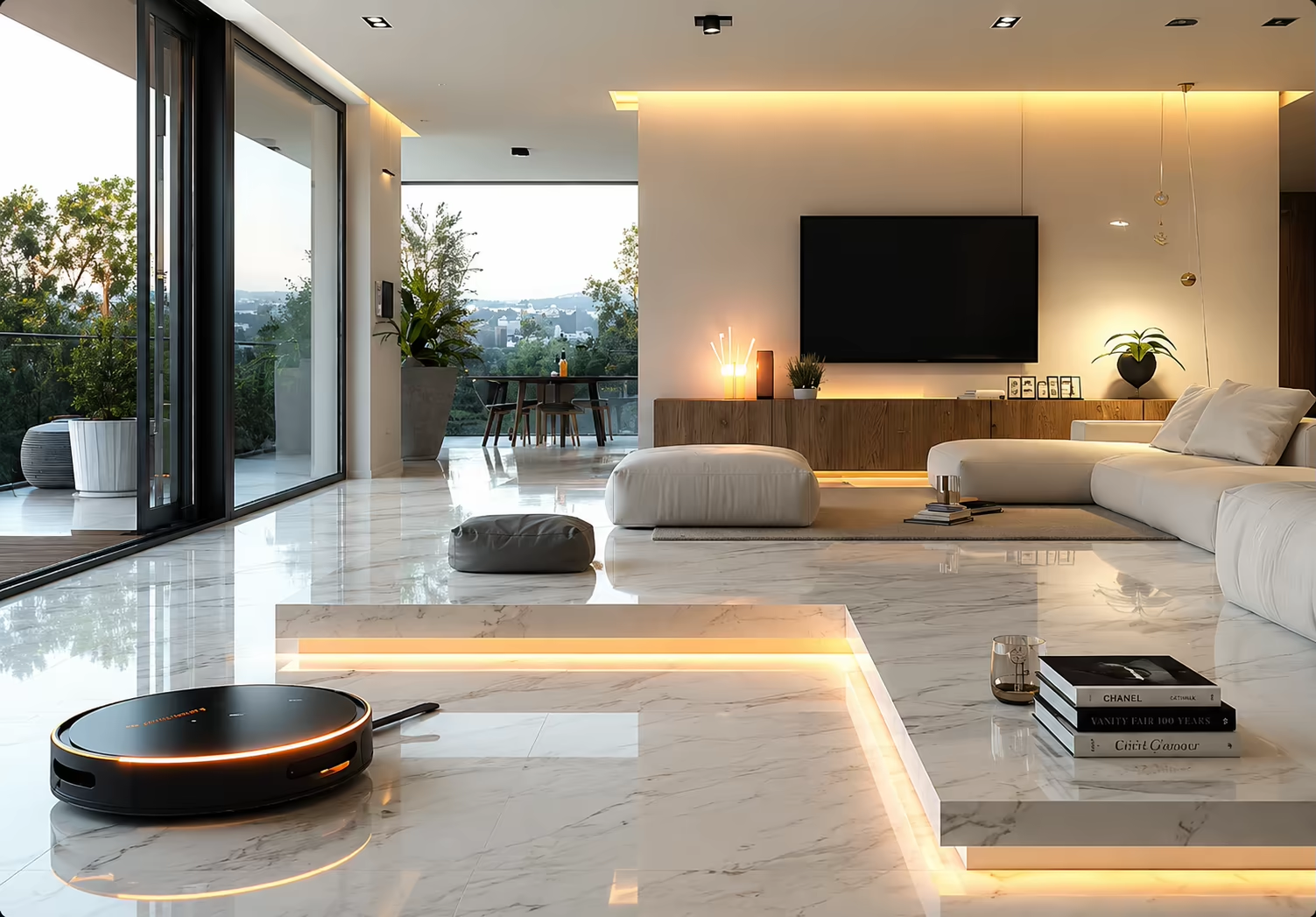
Porcelain tiles require minimal maintenance. Regular sweeping and occasional mopping with a mild detergent are usually sufficient to keep them looking new. Their low porosity means they don't require sealing, unlike natural stone, and spills can be wiped up without leaving stains.
Wide Range of Designs
Porcelain tiles are available in an extensive array of designs, including stone, marble, concrete, wood-inspired, textured, and contemporary finishes. Advanced digital printing technology allows for incredibly realistic reproductions of natural materials, offering the beauty of marble or wood with the durability of porcelain.
Suitable for Residential & Commercial Applications
Whether for a cozy home or a high-traffic hotel lobby, porcelain tiles can meet diverse performance and design requirements. Their versatility in size, finish, and technical specifications makes them a go-to choice for architects, designers, and homeowners alike.
Where Can Porcelain Tiles Be Used?
Porcelain tiles are one of the most versatile building materials available, suitable for nearly every space in residential, commercial, and architectural projects. Their combination of durability, moisture resistance, and design flexibility makes them a preferred choice across diverse applications.
Residential Applications
Porcelain tiles are the perfect choice for modern homes, combining aesthetics with durability:
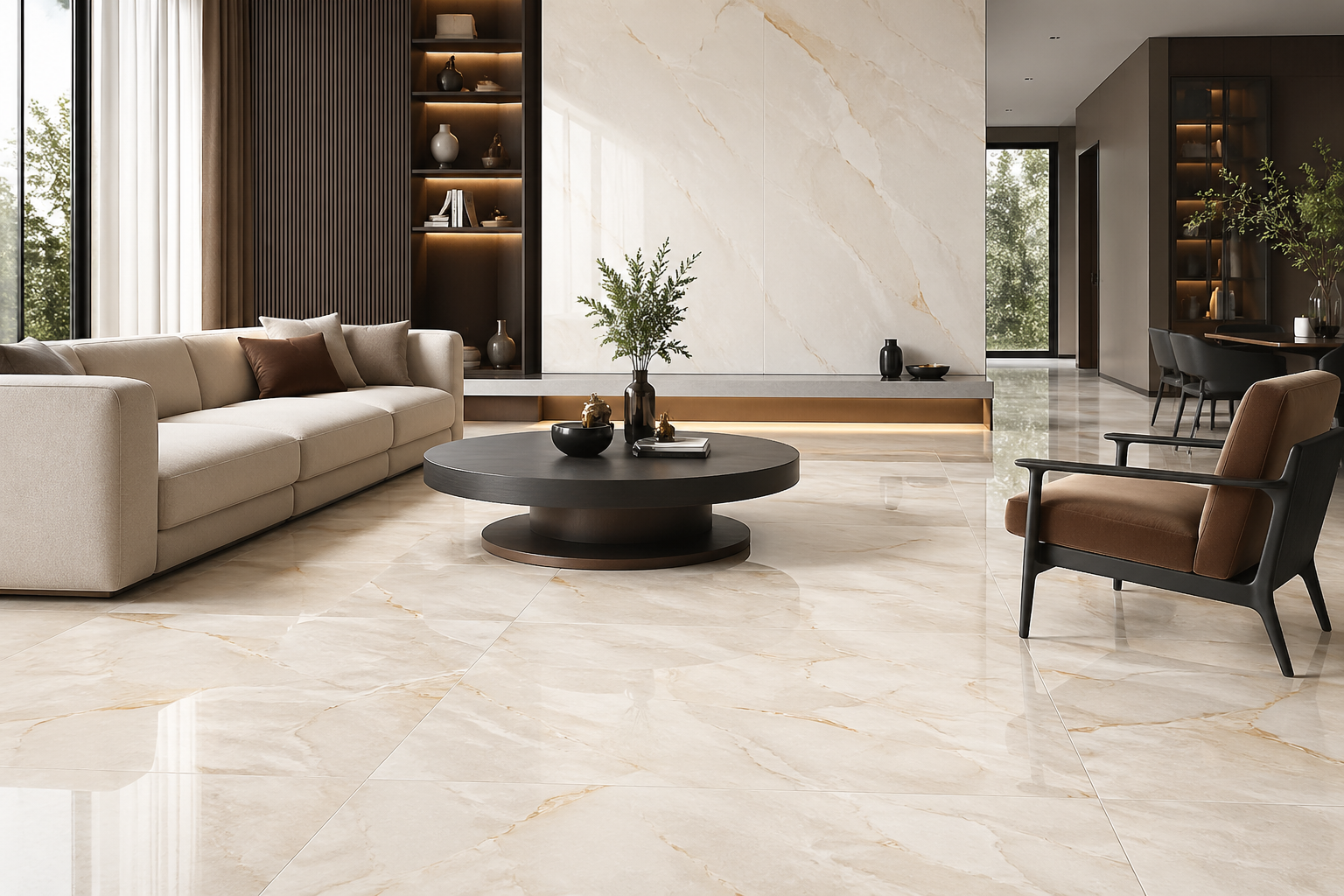
- Living rooms – Large-format tiles create seamless, elegant spaces that make rooms appear more open and sophisticated.
- Kitchens – Durable, stain-resistant surfaces that are easy to clean and maintain, even with daily cooking and spills.
- Bathrooms – Moisture-resistant tiles for walls and floors, with water absorption below 0.5% to prevent mould and water damage.
- Bedrooms – Warm wood-look or textured finishes for comfort, offering the beauty of hardwood without maintenance concerns.
- Entryways – Durable tiles that withstand heavy foot traffic and dirt, maintaining their appearance despite constant use.
- Balconies and suitable outdoor areas – Frost-resistant, slip-resistant options for outdoor living, with appropriate technical specifications for weather exposure.
Porcelain tiles for modern homes offer the perfect balance of style and performance, making them a preferred choice for discerning homeowners who value both aesthetics and longevity.
Also read: How to Choose the Right Tiles for Every Space
Commercial & Architectural Projects
Porcelain tiles are widely used in commercial and architectural projects due to their durability, consistency, and design versatility:
- Hotels – Durable, aesthetically versatile tiles for lobbies, guest rooms, bathrooms, and communal areas, creating a luxurious yet practical environment.
- Offices – Professional, low-maintenance flooring that withstands daily use from foot traffic, rolling chairs, and equipment.
- Retail spaces – Design-forward tiles that enhance brand identity and customer experience, available in countless finishes to match any aesthetic.
- Restaurants – Stain-resistant, easy-to-clean surfaces that meet strict hygiene standards while handling heavy foot traffic and spills.
- Healthcare environments – Hygienic, durable tiles that resist moisture, stains, and bacterial growth, supporting cleanliness and infection control.
- Large residential developments – Consistent quality and availability for large-scale projects, ensuring uniformity across multiple units and phases.
For commercial projects, durability, consistency, technical specifications, availability, and project-scale supply are paramount. Commercial porcelain tiles from a trusted manufacturer ensure these requirements are met, delivering reliable performance across high-traffic environments.
Porcelain Floor Tiles vs Wall Applications
Porcelain can be used for both floors and walls, depending on the product specification. When choosing between floor and wall applications, consider:
- Traffic – Higher traffic areas require more durable, thicker tiles.
- Moisture exposure – Wet areas benefit from low-absorption porcelain.
- Slip resistance – Textured or matte finishes provide better grip for flooring.
- Surface finish – Polished finishes may be better suited for walls, while matte or textured finishes work well on floors.
- Installation requirements – Wall tiles may be lighter and easier to install vertically.
How to Choose the Right Porcelain Tiles
Consider the Application
Match the tile to its intended use—residential, commercial, indoor, outdoor, wet, or high-traffic areas. Different applications demand different technical specifications.
Check Water Absorption
Water absorption is a critical specification. Porcelain tiles should have absorption of less than 0.5%, ensuring durability and moisture resistance. For outdoor applications, this low absorption also provides frost resistance.
Choose the Right Surface Finish
Different finishes suit different applications:
- Polished – Glossy, reflective surface ideal for walls and low-traffic areas.
- Matte – Non-reflective, understated elegance that reduces the appearance of dirt and defects.
- Textured – Provides slip resistance for floors and outdoor areas.
Consider Tile Size and Format
Porcelain tiles are available in various sizes, from standard formats to large-format options like 800x1600mm, 1200x2400mm, and even 1200x3200mm. Large-format tiles create seamless, modern looks with fewer grout lines.
Think About Maintenance
Choose finishes based on cleaning requirements and expected usage. Matte and textured finishes hide dirt and wear better than polished surfaces, making them practical for high-traffic areas.
Evaluate Quality and Manufacturing Standards
Don't choose solely based on appearance. Look at technical specifications, consistency, quality control, and manufacturer credibility. A reliable porcelain tile manufacturer ensures product consistency and performance.
Porcelain Tile Finishes and Design Options
Marble-Look Porcelain Tiles
Advanced digital printing technology replicates the intricate veining and elegance of natural marble, offering luxury without the maintenance challenges of real stone.
Stone-Look Porcelain Tiles
From travertine to slate, stone-look porcelain tiles capture the texture and character of natural stone with superior durability and stain resistance.
Wood-Look Porcelain Tiles
Wood-inspired porcelain offers the warmth and beauty of hardwood with the water resistance and durability of porcelain—ideal for kitchens, bathrooms, and other areas where real wood would be unsuitable.
Concrete-Look Porcelain Tiles
Industrial-chic concrete looks bring a modern, minimalist aesthetic to contemporary interiors.
Textured and Decorative Finishes
Textured finishes provide tactile interest and slip resistance, while decorative tiles add personality and visual impact to feature walls and floors.
Polished and Matte Finishes
Polished finishes offer a glossy, reflective surface perfect for walls and elegant interiors. Matte finishes provide a subtle, sophisticated look that's practical for flooring and high-traffic areas.
These design options make premium porcelain tiles a favorite for contemporary design applications.
Also read: Latest Tile Trends: Modern Designs, Materials & Ideas for Homes
Porcelain Tiles vs Other Tile Types
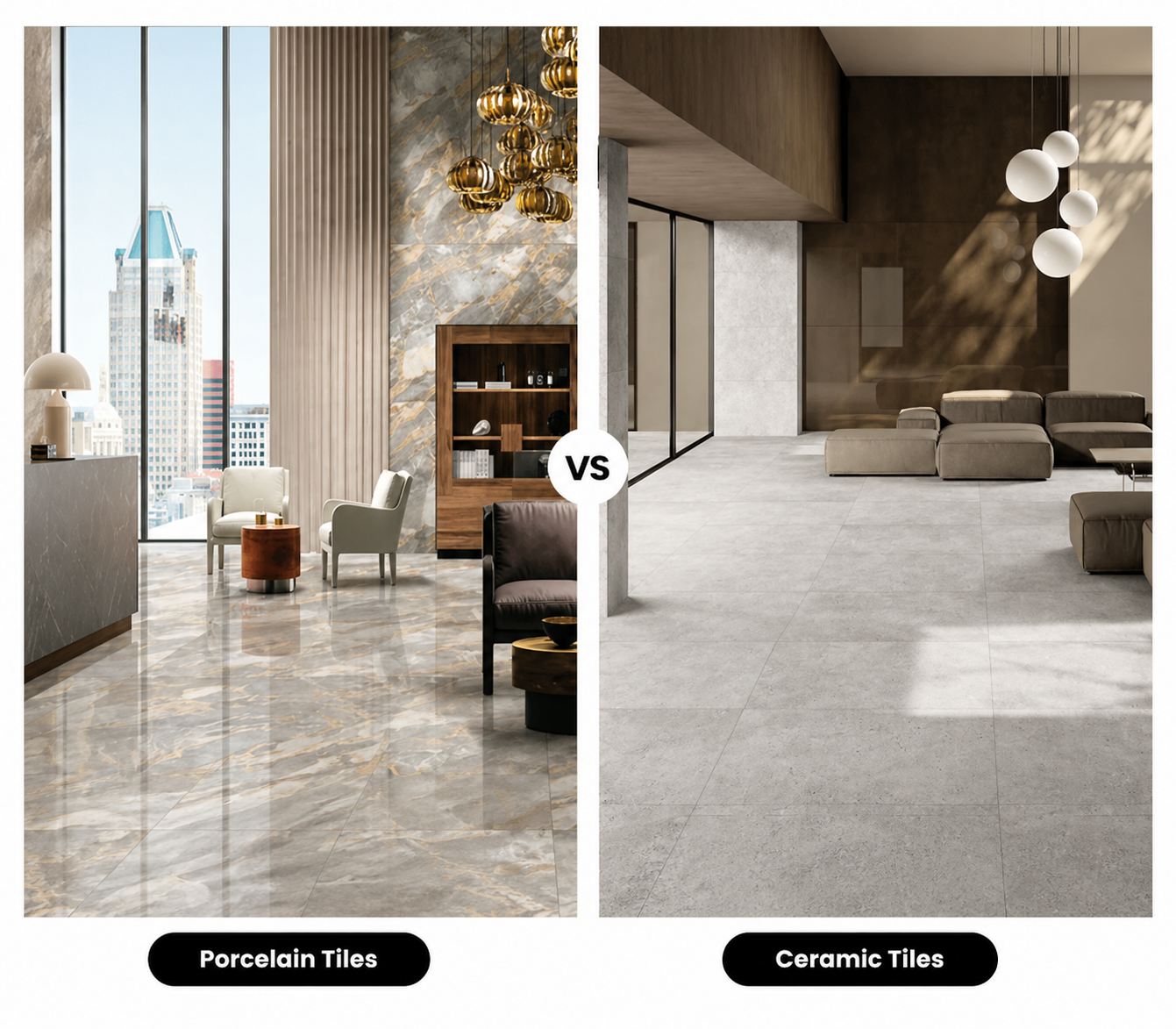
When comparing porcelain tiles with other tile types—such as standard ceramic, vitrified, or natural stone—the differences come down to manufacturing processes and technical specifications rather than simple superiority. Porcelain tiles are made from finer, purer clays and fired at significantly higher temperatures, which directly influences their physical properties.
Density and Water Absorption are where the most pronounced differences emerge. Porcelain tiles are characterized by high density, a direct result of high-pressure pressing and vitrification during firing. This density gives them an exceptionally low water absorption rate—typically below 0.5%. In contrast, other tile types, such as standard ceramic tiles, have absorption rates that can range from 3% to over 10%. This means porcelain tiles are far more resistant to moisture penetration, staining, and freeze-thaw damage, making them suitable for wet environments and outdoor use where other tiles might absorb water and crack or deteriorate over time.
Durability follows closely from density and low porosity. Porcelain tiles offer high flexural strength and resistance to chipping, scratching, and heavy wear, making them ideal for high-traffic residential and commercial settings. Other tile types vary widely in durability—some ceramics may be adequate for light residential use, while natural stones like granite can be exceptionally hard but may require sealing and more careful maintenance. The key takeaway is that porcelain provides consistent, reliable durability across most applications, whereas other tiles must be evaluated on a case-by-case basis.
Applications reflect these performance differences. Porcelain tiles suit virtually all residential and commercial environments—from living rooms and kitchens to hotel lobbies and healthcare facilities. Other tile types are more application-dependent: ceramic tiles may work well for dry interior walls but struggle in bathrooms or outdoors; natural stone offers timeless beauty but may be unsuitable for commercial kitchens or high-moisture areas without extensive sealing and maintenance. Porcelain's versatility gives it a broader range of use, though project-specific requirements should always guide the final choice.
Design options are extensive across both porcelain and other tile types. Digital printing technology has made it possible for porcelain to replicate marble, wood, concrete, and stone with remarkable realism. Similarly, ceramic tiles and natural stones offer their own unique aesthetics. However, porcelain achieves these designs with superior durability and lower maintenance, while other materials may compromise on performance to achieve a certain look.
Also read: Porcelain vs Ceramic Tiles
How to Maintain Porcelain Tiles
Regular Cleaning
Sweep or vacuum regularly to remove dirt and debris that could scratch the surface. Mop with warm water and a mild detergent as needed.
Removing Spills and Stains
Wipe spills immediately to prevent staining. For stubborn stains, use a pH-neutral cleaner specifically formulated for porcelain tiles.
Choosing Suitable Cleaning Products
Avoid acidic or abrasive cleaners that could damage the surface. Stick to pH-neutral, non-abrasive products recommended for porcelain.
Preventing Surface Damage
Use furniture pads under heavy items, avoid dragging objects across the floor, and place doormats at entrances to reduce dirt and grit.
Why Choose Granitogres Porcelain Tiles?
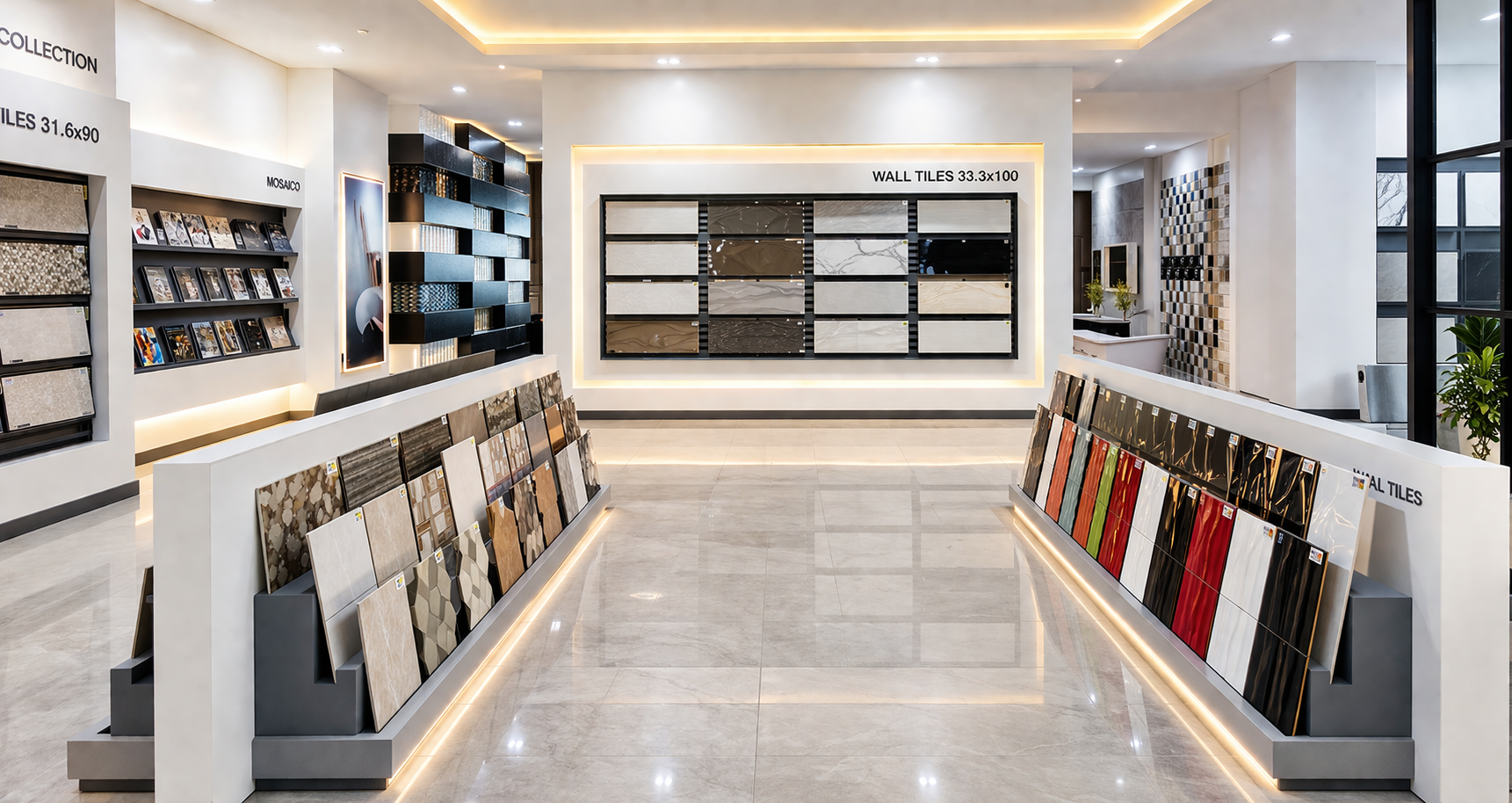
Granitogres is a trusted porcelain tiles manufacturing brand in India, with a strong showroom presence across Kerala and a strategic export hub in the UAE.
- Manufacturing expertise – Years of experience in producing high-quality porcelain tiles.
- Advanced production technology – State-of-the-art manufacturing processes ensure precision and consistency.
- Premium porcelain collections – A wide range of designs, finishes, and sizes for every application.
- Quality standards – Rigorous quality control at every stage of production.
- India and UAE operations – Strong regional presence with global reach.
- Global export network – Serving homeowners, builders, and designers worldwide.
- Residential, commercial, and architectural applications – Solutions for every project scale and requirement.
Granitogres combines technical excellence with design innovation, making it a preferred choice for premium porcelain tiles in India and beyond.
Choosing the Right Porcelain Tiles
Porcelain tiles offer a compelling combination of durability, moisture resistance, design versatility, and easy maintenance, making them an excellent choice for residential, commercial, and architectural applications.
The right tile depends on your specific application, technical specifications, finish, size, and design requirements. Whether you're renovating a home, designing a hotel, or developing a large-scale commercial project, porcelain tiles provide the performance and aesthetics you need.
When choosing a manufacturer, prioritize quality, consistency, and credibility over appearance alone. A trusted manufacturer ensures your investment delivers lasting value.
This is where Granitogres sets itself apart. As a trusted porcelain tiles manufacturer in India, with a strong showroom presence across Kerala and a strategic export hub in the UAE, serving homeowners, builders, and designers with durable, precision-engineered tile solutions for residential and commercial projects worldwide.